What Is MDF? Types, Uses and Furniture Care
MDF (medium-density fibreboard) is a panel made from wood fibres, binding agents and special additives. The manufacturing process gives it a uniform structure and a smooth surface that can be shaped and finished in many ways. These qualities make MDF a practical material for custom furniture.
How Is MDF Made?
MDF production begins with the processing of raw wood. The wood is first broken into small pieces, which are then processed to extract the fibres.
Binding agents and other ingredients are added to the fibres. The mixture is spread evenly and pressed at high temperature and pressure to form a panel with a uniform structure.
This process gives MDF a consistent density and helps it retain its shape. MDF is free of the knots and variations in grain direction found in natural wood, so it behaves more predictably during machining.
Key Properties of MDF
Uniform structure. Its consistent composition allows for precise machining and helps parts retain their dimensions.
Smooth surface. MDF takes a range of decorative finishes well, especially paint and lacquer.
Versatility in machining. MDF can be shaped into simple geometric forms, intricate contours and decorative details.
Dimensional stability. Under suitable conditions, MDF retains its shape and is less affected by the natural direction of wood fibres.
Types of MDF and How They Differ
MDF panels vary in density, thickness, composition and intended use. The right type depends on the furniture design, the conditions in which it will be used and the desired result.
Standard MDF
The most common type, standard MDF is used for cabinet fronts, decorative panels, shelves and various structural components. Its uniform structure makes it easy to machine.
Moisture-Resistant MDF
This board contains additives that improve its resistance to moisture compared with standard MDF. It is used in areas with greater exposure to moisture, including kitchen and bathroom furniture. Moisture resistance differs from waterproofing, so edges, joints and surfaces still need suitable protection.
Fire-Retardant MDF
This board contains additives that slow the spread of fire under certain conditions. It can be used in projects where materials must meet fire safety requirements. Check the product’s certificates and technical specifications to determine whether it meets those requirements.
High-Density Fibreboard (HDF)
HDF is a fibreboard with a higher density. Its strength and surface properties make it suitable for a range of decorative and structural components. The choice depends on the intended use and expected load.
MDF Finishes and Design Options
One of MDF’s main advantages is the range of decorative finishes it can take. Its smooth, uniform surface provides an even base for different looks.
Painted MDF
Painting is one of the most common ways to finish MDF. A properly prepared surface takes colour evenly and can be finished in matt, semi-matt or gloss.
A wide choice of colours lets designers match furniture to the room’s overall design. Cabinet and drawer fronts can also be routed into different shapes or given decorative profiles.
Veneered MDF
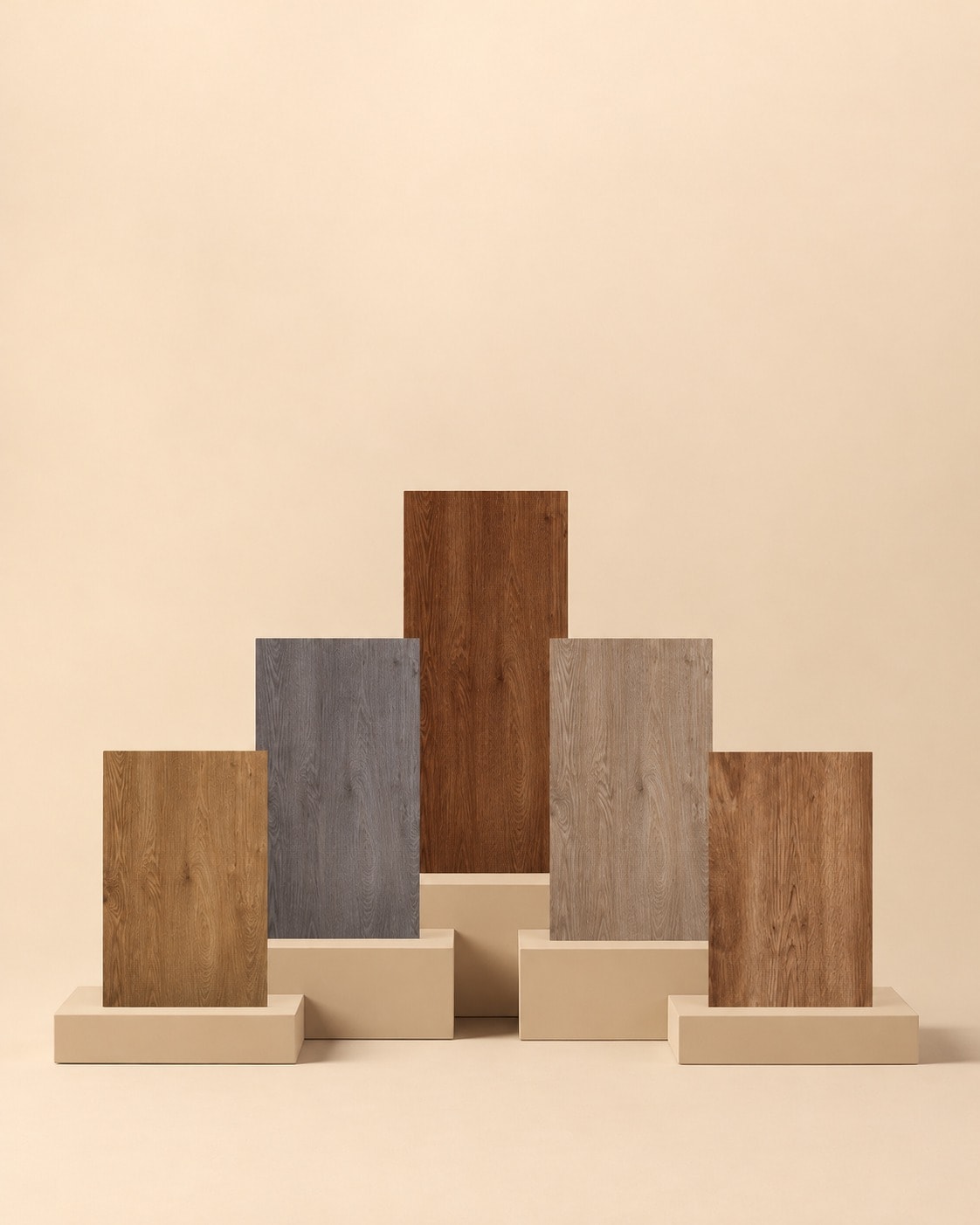
Applying natural wood veneer to MDF combines the stability of an engineered board with the appearance of natural wood. The veneer preserves the wood’s grain and visual character, while the MDF provides a flat base for bonding.
This finish works well in projects that call for the look of natural wood and a visually consistent surface.
Laminated MDF
A decorative laminate gives MDF a specific colour, texture or visual effect. Options include woodgrain patterns, solid colours and other decorative designs.
Where Is MDF Used in Furniture Making?
MDF is easy to shape and finish, making it suitable for a wide range of furniture and interior features.
Kitchen furniture — cabinet fronts, decorative panels and other components.
Cabinets and wardrobes — door fronts, decorative details and selected internal components.
Living room furniture — TV units, shelves, wall panels and custom units.
Bedroom furniture — headboards, bedside tables and decorative surfaces.
Commercial interiors — custom furniture for hotels, offices, restaurants and other venues.
Decorative elements — routed panels, mouldings and components in a variety of geometric shapes.
What to Consider When Choosing MDF
Along with appearance, consider the following technical factors.
Match the board’s density and thickness to the furniture’s purpose, construction and expected load.
Choose a type of MDF suited to the room’s conditions. Pay particular attention to protecting edges and joints.
Follow the correct process when painting, veneering or applying another decorative finish.
Review the manufacturer’s technical documentation, emissions class and relevant certificates.
How to Care for MDF Furniture
Proper care helps MDF furniture last and retain its appearance. The best cleaning method depends on the finish.
Everyday Cleaning
Use a soft, dry or slightly damp microfibre cloth to remove dust and light dirt. After cleaning, wipe the surface with a dry cloth to remove any remaining moisture.
Protecting Against Moisture
Avoid prolonged contact with water, especially along unsealed edges. Wipe up spills immediately. Pay particular attention to kitchen and bathroom furniture, which is more likely to be exposed to moisture.
Choosing Cleaning Products
Avoid abrasive sponges, harsh cleaners and aggressive chemicals that may damage the finish. Test cleaning products on an inconspicuous area before use.
Caring for Painted Surfaces
Clean painted MDF with a soft cloth and a neutral cleaner if the finish manufacturer recommends one. Avoid vigorous rubbing, especially on matt and semi-matt surfaces.
Caring for Veneered Surfaces
MDF finished with natural wood veneer needs particular protection from moisture and high temperatures. Clean it with a slightly damp cloth and avoid letting water pool on the surface. Keep the furniture away from sources of intense heat.
Protecting Against Heat and Direct Sunlight
Prolonged exposure can change the colour and appearance of the finish. Keep furniture out of direct sunlight and away from sources of intense heat.
Regular care and suitable cleaning products help preserve both the appearance and function of MDF furniture.