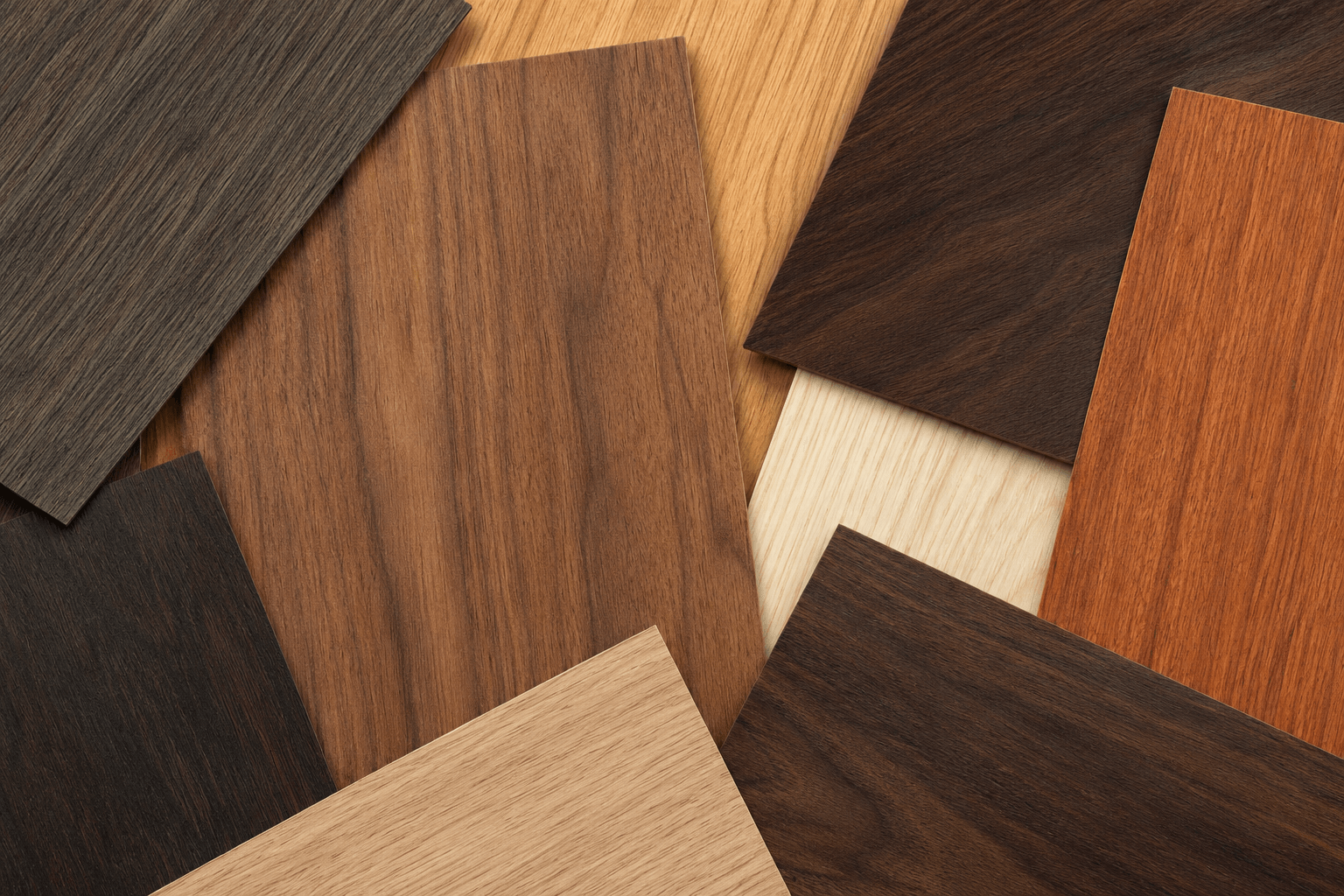
Veneer is one of the distinctive materials used in furniture manufacturing, combining the natural beauty of wood with the possibilities of contemporary design. Its defining feature is the preservation of the authentic appearance of natural wood, giving each piece of furniture a unique character.
Veneer makes it possible to achieve the texture and visual appeal of natural wood across furniture surfaces of various shapes and sizes. This is why it is widely used in the creation of bespoke furniture for both residential and commercial interiors.
What Is Veneer and How Is It Made?
Veneer is a thin layer of natural wood produced by slicing or peeling a timber log using specialised machinery. The resulting sheets retain the wood's natural structure, grain patterns and distinctive colour variations.
During the manufacturing process, the timber log is processed using different cutting methods, each of which determines the veneer’s final visual appearance. The resulting sheets are then dried, sorted and prepared for further use.
In furniture manufacturing, veneer is typically applied to a suitable substrate, such as MDF or another furniture board. Using specialised adhesives and pressure, the veneer is firmly bonded to the substrate. The surface then undergoes the necessary finishing processes.
Types of Veneer and Their Visual Characteristics
The final appearance of veneer largely depends on the wood species and the cutting method used. Even veneer produced from the same wood species can display different textures and grain patterns.
Tangential Cut (Crown Cut)
This cutting method produces veneer with distinctive curved, wavy and naturally decorative grain patterns. The growth rings create prominent visual forms across the surface, giving the veneer a particularly expressive appearance.
Radial Cut (Quarter Cut)
Radial cutting produces a more linear and consistent grain pattern. The wood fibres appear in relatively parallel lines, creating a calm and orderly visual effect.
Rift Cut
This method produces an elongated, straight and consistent grain pattern. It is particularly common in oak veneer, where a clean and uniform visual structure is desired.
Rotary Cut
In this method, the timber log rotates against a specialised cutting blade, producing a continuous sheet of veneer. The result is a relatively wide surface, often characterised by a more dynamic and irregular grain pattern.
The choice of cutting method depends on the wood species, the design concept and the desired visual result.
Types of Veneer by Wood Species
The visual characteristics of veneer largely depend on the wood species from which it is produced. Each species differs in its natural colour, texture, grain structure and pattern. This variety allows the material to be selected according to the interior concept and specific design requirements.
Oak Veneer
Oak veneer is one of the most widely used options in furniture manufacturing. It is characterised by a pronounced grain structure and distinctive linear patterns. Its colour range extends from light, yellowish tones to deeper shades of brown. Oak veneer works equally well in both contemporary and classic furniture designs.
Walnut Veneer
Walnut veneer is distinguished by its warm brown tones and rich, often contrasting grain patterns. Its naturally varied appearance gives it a distinctive visual character. It is frequently used for premium furniture fronts, wall panels and decorative elements.
Ash Veneer
Ash veneer is characterised by its relatively light colour and clearly defined, linear grain. Its natural pattern creates a light and understated visual effect. It is particularly well suited to contemporary interiors where natural materials and lighter colour palettes are preferred.
Maple Veneer
Maple veneer stands out for its light, creamy colour and relatively uniform grain structure. Its subtle appearance makes it particularly suitable for minimalist designs and interiors where clean surfaces and visual consistency are important.
Eucalyptus Veneer
Eucalyptus veneer offers a variety of textures and colours. Depending on the particular species, it can feature either a calm, uniform grain or a more pronounced natural pattern. Its versatility creates interesting possibilities for bespoke furniture design.
Reconstituted Veneer
Unlike natural veneer, reconstituted veneer is manufactured through a specialised technological process. Its production involves thin sheets obtained from fast-growing wood species, which are dyed, arranged and bonded together using a specific method. The resulting material is then sliced into thin sheets, creating veneer with a predetermined texture and grain pattern.
The main characteristic of reconstituted veneer is its visual consistency and wide range of design possibilities. Unlike natural wood, whose grain depends on the individual structure of each timber log, reconstituted veneer allows for a more uniform colour and repeatable pattern.
Reconstituted veneer is particularly suitable for projects where visual consistency across surfaces, repeating grain patterns and precise execution of a specific design concept are essential.
Why Is Veneer Matching Important?
When working with veneer, selecting the right wood species is only part of the process. Equally important is the arrangement of individual sheets and the way their grain patterns relate to one another.
Different veneer-matching techniques create distinct visual effects:
Book Match
Two consecutive veneer sheets are placed next to each other in a mirrored arrangement. This creates a symmetrical pattern, often resembling the wings of a butterfly.
Slip Match
Veneer sheets are placed side by side without alternating or reversing their orientation. This creates a more consistent and repeating grain pattern.
Sequence Match
Consecutively selected veneer sheets are arranged so that the wood grain flows visually from one adjoining surface to another, creating continuity across multiple elements.
These techniques are particularly important when manufacturing large furniture fronts, wardrobes, wall panels and other composite elements. A carefully planned veneer arrangement visually connects individual components, giving the overall design a more cohesive and balanced appearance.
Advantages of Veneer in Furniture Manufacturing
Preserves the authentic texture, grain and natural colour variations of wood.
Offers a wide range of visual possibilities depending on the wood species, cutting method and veneer arrangement.
Allows large furniture fronts and panels to be produced with a consistent visual appearance when combined with a suitable substrate.
Combines well with painted MDF, metal, glass and other decorative materials.
Makes it possible to create distinctive visual compositions tailored to the requirements of each individual project.
Veneer Processing Technology and Quality Control
The final quality of veneer is determined not only by the characteristics of the raw material but also by its preparation, bonding process, processing parameters and final surface finishing.
At Ardenze, veneer processing involves the use of an Italian-made ORMA hot press. The machine applies the appropriate pressure and temperature required during the veneer bonding process.
At this stage, particular attention is paid to the condition of the material, substrate preparation and the correct selection of processing parameters. Each of these factors influences the final surface quality and the overall result of the manufacturing process.
How to Care for Veneered Furniture
Proper care is essential to maintaining the appearance and longevity of veneered furniture. Although finished veneer surfaces are designed for everyday use, natural wood still requires a certain level of attention.
We recommend the following:
Clean surfaces with a soft, slightly damp cloth.
Avoid prolonged exposure to water.
Do not place hot objects directly on veneered surfaces.
Avoid using harsh chemical cleaning products.
Limit prolonged exposure to direct and intense sunlight.